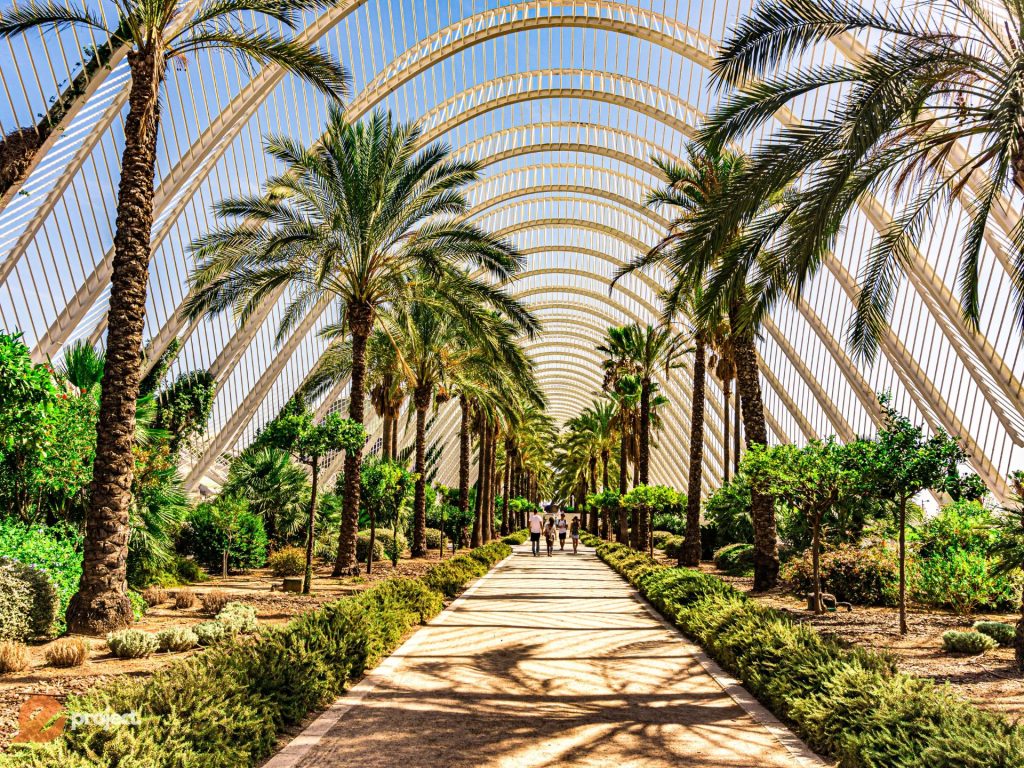
Why is Valencia Europe’s greenest city?
When it comes to greenness, the southeastern city is already starting from a strong base.
Valencia boasts over two million square metres of gardens, making it a popular tourist destination for the rest of Europe. Just 10 kilometres south of the centre lies Albufera National Park, a protected lagoon area described as the city’s “green lung” by mayor of the Alfafar municipality, Ramón Adsuara.
But it’s what you do with what you’ve got that counts – and that has earned Valencia title position in 2024, beating co-finalist Cagliari in Italy.
Valencia’s motto is ‘On a Mission Together’ and city authorities were praised by the Commission for working with residents to reach their climate neutrality and environmental goals.
As part of its mission to become carbon neutral by 2030, a number of green initiatives are being piloted across the city.
Many of them are found in the Cabanyal district, historically home to the local fishing community. In the 3,500 metre-squared Cabanyal Municipal Market for example, air conditioning is now being supplied by rooftop solar panels.
Nearby in Las Naves, Valencia’s first ‘socialised solar plant’ is around 80 per cent funded by individual citizens, who each chipped in between €100 and €2,000 for a stake in the renewable energy generator.

Other green initiatives include smart lighting along the seafront, where more than 20,000 lamp posts have been fitted with energy saving technology. Lamp posts are also doubling up as EV charging points, under support from the EU-funded MAtchUP project.
How is Valencia getting even greener?
One of the European Green Capital initiatives from Valencia is to have the Albufera declared a biosphere reserve.
The national park holds Spain’s largest freshwater lagoon; home (at times) to 300 different species of birds, especially waterfowl including flamingos.
It’s been a Special Protection Area for 30 years, but becoming a UNESCO biosphere reserve would grant it even greater sanctity as a ‘learning place for sustainable development’.
Valencia has designed three new routes to showcase the city’s assets and progress in three key areas: nature, including Albufera; sustainable mobility, with greater promotion of public transport, cycling and walking; and the recovery of public space for citizen’s enjoyment.

The first new route is called ‘the green river’ and it covers the nine kilometres of the Turia Garden – one of Spain’s largest urban parks which tracks the former Turia riverbed. It’s described as a “healthy backbone” with clear climate strengths: staying three degrees cooler than other areas of the city, while acting as a natural sponge that retains and filters water to the subsoil – thus preventing floods and erosion.
The second route takes walkers through the centre, across squares and pedestrianised streets that showcase Valencia’s commitment to sustainable mobility.
Route 3 encompasses the city’s “three natural pantries”: a peri-urban orchard, the fish-stocked Mediterranean sea, and Albufera with its surrounding rice fields, where paella was first cooked up.
Also on Valencia’s busy schedule is a climate summit it is planning to host, bringing together more than 200 European cities to catalyse the continent’s move to climate neutrality.
Valencia will receive €350,000 from the EU to put towards its green efforts this year.